
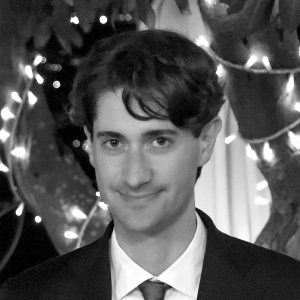
Salvatore Florio, Oslo
Title: Sets and Pluralities
Abstract: There is a close but puzzling connection between sets and pluralities. While a set is fully characterized by the plurality of its elements, the set-theoretic paradoxes seem to show that not all pluralities correspond to sets. I examine and compare two ways in which theories of pluralities have been used to explain sets. The first, famously associated with Cantor, takes a set to be one object formed from a plurality. The second, famously advocated by Russell, interprets set talk as plurality talk in disguise. I show that Cantor’s ideas lead to a simple, consistent, and powerful theory of set abstraction.

Vera Koponen, Uppsala
Title: Logical convergence laws from the perspective of statistical relational artificial intelligence
Abstract: The topic of logical convergence laws in finite model theory has a more than 50 year long history. I will survey more recent results on convergence laws which consider probability distributions on finite structures, and formal logics, that are motivated by questions in statistical relational artificial intelligence, a branch of artifical intelligence that combines the logic oriented and probability oriented schools of artificial intelligence.
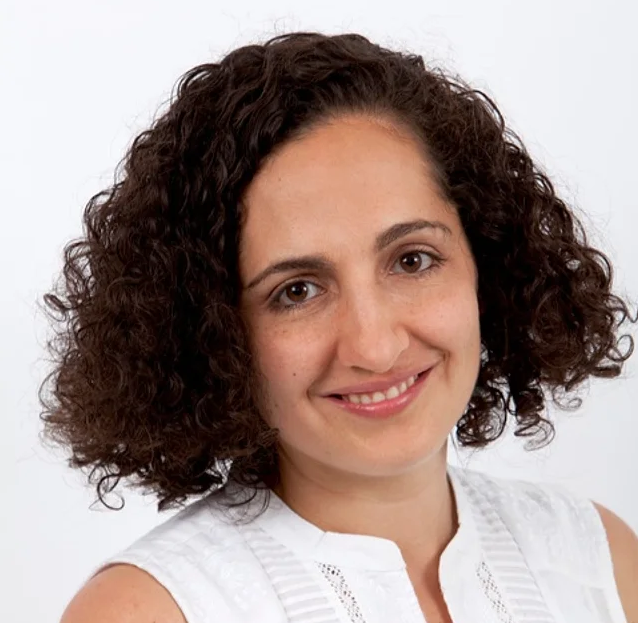
Magdalena Ortiz, Vienna
Title: It’s All Connected: Logic and Knowledge Representation for Graph Data
Abstract: Decidable logics have been fundamental to the development of correct and reliable data-centric intelligent systems. In particular, Description Logics (DLs) are a powerful and well-understood toolbox of decidable logics for describing and reasoning about graphs. As AI permeates more and more of our interactions with information and knowledge, reliable reasoning techniques that enable us to reach sound and verifiable conclusions are more important than ever. In this talk, we will discuss some emerging challenges for reasoning with graph data, a cornerstone of modern information management. The dominant graph-data paradigms have undergone major standardisation efforts in recent years, reopening old questions and raising new ones. The emergence of GQL and SQL/PGQ as standard query languages for property graphs resolves enduring obstacles to logic-mediated graph querying, while the rise of new constraint languages for graphs such as SHACL reveals a rich landscape of novel reasoning problems, including validation, static analysis, and constraint learning. These are intimately connected to description logics but demand revisiting basic assumptions about open- and closed-world reasoning, fixed-point semantics, and inconsistency tolerance. Both threads point to the same conclusion: some of the most exciting questions about graph data in intelligent systems are, at their core, problems of decidable logic, reasoning, and knowledge representation.

Carsten Schürmann, Copenhagen
Title: Towards a Logic of Zero-Knowledge
Abstract: In cryptography, a $\Sigma$-protocol is a 3-round cryptographic protocol satisfies several important properties, including two special-soundness, completeness, and honest verifier zero-knowledge properties. These protocols are widely-used in larger cryptographic constructions and form the basis for a logic to reason about zero-knowledge. The goal of my talk is threefold. First, I will try to give a gentle introduction into $\Sigma$-protocols and what the associated properties mean. Second, I will introduce a handful of composition (reasoning) rules to construct new protocols from existing ones, and finally, I demonstrate that this logic of zero-knowledge can handle complex examples from the literature including signatures schemes that can be used for age verification. All claims presented in this talk were successfully and efficiently formalized in the Rocq proof assistant. This talk is based on joint work with Markus Krabbe Larsen and Abhi Shelat.